
Climate-Positive Himalayan Natural Fibre for Advanced Textiles
HimGra® is a proprietary natural fibre derived from perennial Himalayan grass, engineered for modern textile supply chains that demand performance, traceability, and responsible material sourcing.
This technical overview summarises the fibre’s identity, morphology, processing compatibility, sustainability profile, and development pathway. Detailed laboratory reports and certifications are available during sampling and project stages.
Executive Summary
HimGra® is a new-generation natural fibre developed from perennial Himalayan grass cultivated on rainfed land without fertilizers or pesticides. Through a patented, chemical free, waterless process, the raw grass is transformed into a high-performance textile fibre with a naturally hollow, circular structure.
This unique morphology delivers a combination of thermal comfort, breathability, and lightweight insulation, making HimGra suitable for apparel, home textiles, and blended yarn applications. The fibre is designed to integrate with conventional spinning, weaving, and finishing systems, enabling scalable adoption without the need for specialised machinery.
HimGra supports traceable sourcing, low-input cultivation, and a controlled environmental footprint at source. The material has been validated across multiple development pilots and is progressing through yarn and fabric applications with partner mills and brands.
This document provides an overview of the material’s identity, structure, processing compatibility, sustainability profile, and application potential. Detailed test data, certifications, and project-specific documentation are available during development and sampling stages.
Material Identity
Material Name: HimGra® Fibre
Material Type: Natural fibre derived from perennial Himalayan grass
HimGra® fibre is produced from a wild and cultivated perennial grass species grown in Himalayan hill regions on rainfed land. The crop is cultivated without the use of chemical fertilizers or pesticides, relying on natural rainfall and low-input agricultural practices.
The fibre is extracted using a proprietary chemical free, waterless process. No chemical retting is involved in the primary fibre separation stage. This approach reduces water use, limits chemical load, and preserves the intrinsic structure of the fibre.
HimGra is positioned as a climate-positive natural fibre designed for modern, industrial textile systems, combining environmental responsibility with manufacturing compatibility and performance.
Fibre Morphology and Structure
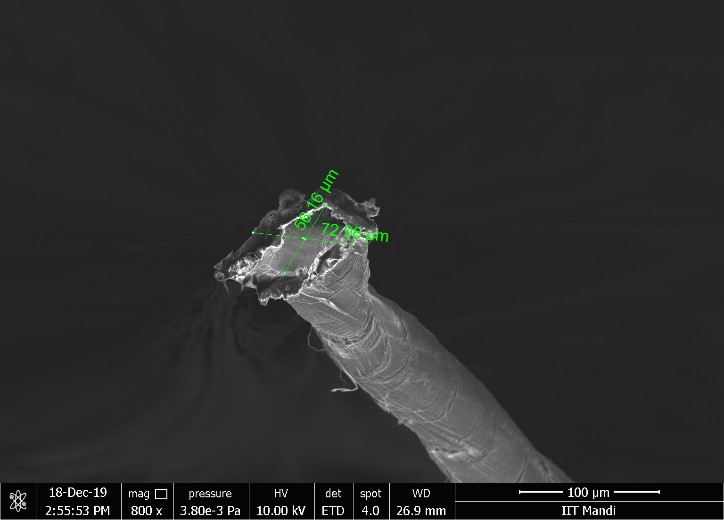
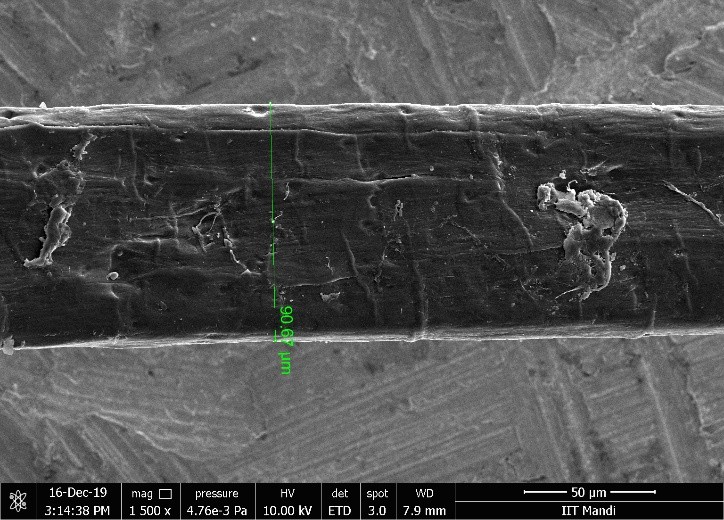
HimGra® fibre exhibits a naturally hollow, circular cross-sectional structure. This morphology is a defining characteristic of the material and plays a key role in its comfort and performance attributes.
The hollow structure traps air within the fibre, contributing to thermal insulation in cooler conditions while maintaining breathability in warmer environments. This allows textiles made from HimGra to offer balanced thermal comfort across seasons.
The circular profile and natural structure also contribute to a lightweight feel and a textile-friendly hand, making the fibre suitable for both standalone use and blending with other natural and regenerated fibres.
Performance Characteristics (Indicative)
HimGra® fibre is designed to deliver functional comfort and processing stability suitable for a wide range of textile applications. The following characteristics are based on development-stage evaluations and application experience:
- Thermal comfort: naturally insulating due to hollow structure, while remaining breathable
- Moisture comfort: supports wear comfort in apparel and interior applications
- Handfeel: natural, soft-to-touch textile character depending on yarn and fabric construction
- Weight: lightweight relative to solid-structure natural fibres
- Durability: suitable for repeated use in apparel and home textile contexts
- Process behaviour: stable in conventional textile processing environments
Detailed laboratory test reports, performance benchmarks, and application-specific data are available during sampling and development discussions.
Spinnability and Processing Compatibility
HimGra® fibre has been developed for compatibility with existing textile manufacturing infrastructure.
- Suitable for both short-staple and long-staple spinning systems
- Compatible with conventional spinning, weaving, knitting, and finishing machinery
- No special equipment or retrofitting required for standard processing lines
HimGra can be blended effectively with a range of fibres, including:
- Cotton
- Viscose / Liva
- Wool
- Silk
- Regenerated fibres
Yarns containing HimGra have demonstrated stable performance in downstream processes, including high-speed weaving and knitting environments, supporting industrial scalability.
Sustainability and Impact Profile
Cultivation
- Grown on rainfed land
- No chemical fertilizers or pesticides used
- Low-input agricultural model suitable for hill regions
Processing
- Waterless fibre extraction
- No chemical retting in primary fibre separation
- Reduced water and chemical load compared to conventional bast fibre processes
Environmental Logic
- Low cultivation footprint due to rainfed, input-free growing conditions
- Process designed to align with rainfed cultivation models
- Supports material strategies aligned with responsible sourcing and impact reduction
Social Impact
- Supports livelihood generation in rural Himalayan hill communities
- Promotes climate-resilient agricultural practices in vulnerable regions
Traceability
- Origin traceable to cultivation regions
- Batch-level traceability frameworks are being implemented across the value chain
Applications
HimGra® fibre is suitable for a wide range of textile categories, including:
- Apparel (woven and knitted)
- Home textiles and interiors
- Blended yarns and fabrics
- Comfort-focused and lifestyle textile applications
Final performance characteristics depend on yarn construction, blend composition, fabric structure, and finishing processes.
Development and Commercialisation Pathway
Brands, mills, and development partners typically engage with HimGra through the following steps:
- Review fibre overview and technical orientation (this document)
- Request HimGra Yarn Samples for evaluation and development
- Develop yarns and fabrics with partner mills
- Review Digital Fabric Catalogue and request Fabric Samples or Swatch Books
- Conduct pilot projects and scale into production
HimGra is supported by a structured material access and sampling process to ensure efficient development and responsible use of material resources.
Validation and Recognition
HimGra® has received recognition and support from multiple innovation and textile ecosystem stakeholders, including:
- Ministry of Textiles, Government of India — Textile Innovation Challenge (Winner)
- Fashion for Good
- IIT Mandi Catalyst
- IRMA ISEED
- Global Resilience Partnerships
- International Centre for Integrated Mountain Development (ICIMOD)
- Centre of Innovation in Public System
- Government of Uttarakhand
HimGra yarns and fabrics have been evaluated across multiple brand and mill pilot programmes covering apparel, home, and knit applications.
Compliance and Disclosure Notes
HimGra® is a natural fibre at a scaling stage of commercialisation. Certification, test standards, and Digital Product Passport (DPP) components are being developed and expanded in line with market and regulatory requirements.
Detailed test reports, certifications, and project-specific compliance documentation are available during sampling, pilot, and commercial development stages, and may be shared under appropriate confidentiality frameworks.
Next Steps and Contact
To proceed with material evaluation and development:
- Request HimGra Yarn Samples
- Download the HimGra Fabric Digital Catalogue
- Request Fabric Samples or a Curated Swatch Book
For partnerships, development projects, or technical discussions, please contact:
Email: kd.ceo@himgra.com
Website: www.himgra.com
DESCATUK
The Development & Social Cooperation Association for Traditional UK Ltd oversees HimGra operations, ensuring ethical sourcing standards and community benefit distribution.
Governance documentsDev UK Foundation
The charitable arm supporting community development, education initiatives, and sustainable pastoral practices in Himalayan regions.
Impact reports